Guide
NYC Transfer Tax and Mansion Tax: 2026 Rates, Who Pays, Examples
NYC transfer tax explained: city RPTT, New York State transfer tax and mansion tax rates for 2026, who pays each, and worked examples with a free calculator.
Listen to this article
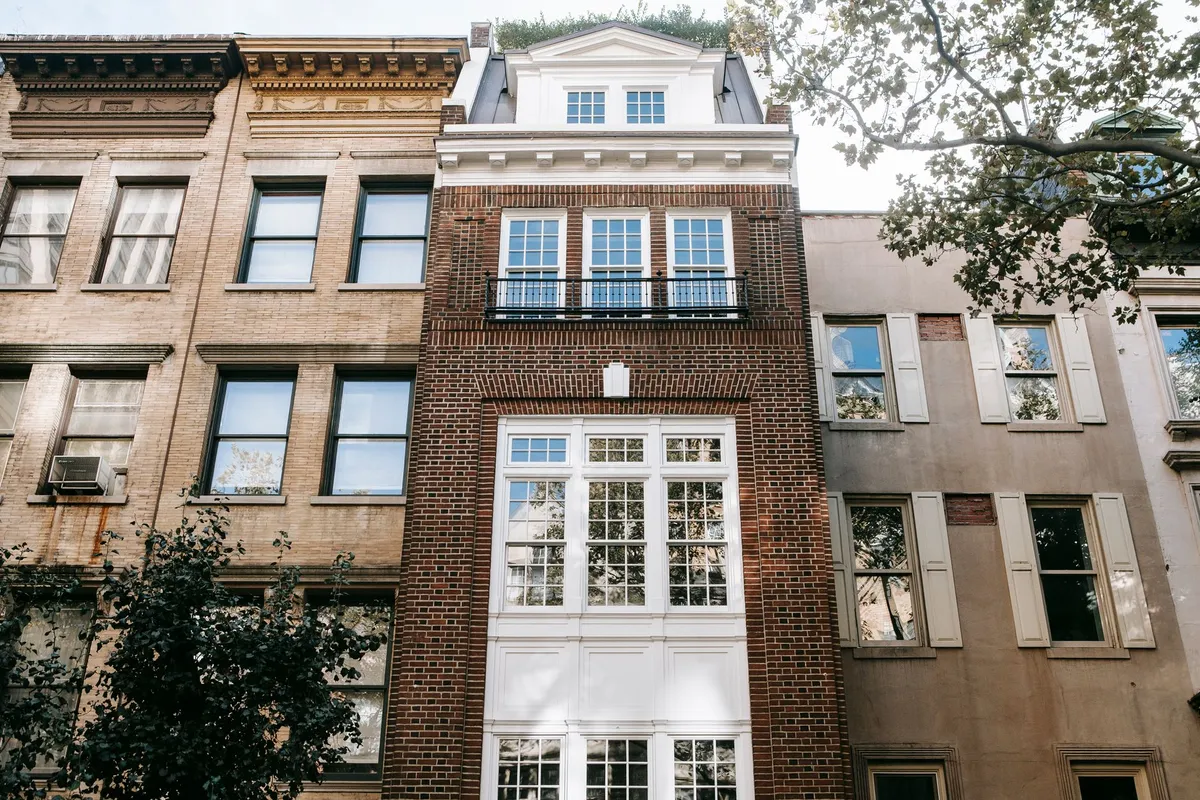
Every sale of New York City real estate triggers up to three separate transfer taxes: one from the city and two from the state. Together they run from 1.4% of the price on a small home sale to 5.975% on a home sold for $25 million or more. For a seller of a large commercial building, the city and state taxes alone take 3.275% of the price.
This guide explains each tax, the 2026 rates, who pays, and the traps at the thresholds, with worked examples you can check in the calculator below.
Source: NYC Department of Finance; NY Tax Law §§ 1402, 1402-a, 1402-b; NYS Tax Department TSB-M-19(1)R. Checked Nov. 19, 2026.
Calculate your transfer taxes
Total transfer taxes–
- NYC transfer tax (RPTT)
- NY State transfer tax
- Mansion tax (incl. NYC supplemental)
Usually paid by the seller: · by the buyer:
An estimate, not tax advice. Not modeled: exemptions, credits, transfers of entity interests, REIT rates, the pied-à-terre surcharge, mortgage recording tax and title costs. Your closing attorney files the actual returns.
Prefer it full-screen? The same calculator lives at /tools/transfer-tax.
1. The NYC Real Property Transfer Tax (RPTT)
The city taxes sales, grants, assignments, transfers and surrenders of real property in New York City. It also reaches deals done through companies: a transfer of 50% or more of a controlling interest in an entity that owns NYC real estate is taxed as well, as long as the price is more than $25,000.
Two property classes, two rate schedules:
| Property type | Price $500,000 or less | Price over $500,000 |
|---|---|---|
| Residential: one- to three-family house, individual residential condominium unit, individual co-op apartment | 1% | 1.425% |
| Everything else: four or more units, office, retail, industrial, land, mixed-use buildings | 1.425% | 2.625% |
Source: NYC Admin. Code § 11-2102, as published by the Department of Finance.
Who pays: the seller (the grantor in tax language). If the seller doesn’t pay, or is an exempt organization, the buyer (the grantee) is liable for it.
Deadline: the tax is paid, and the city’s Real Property Transfer Tax return (Form NYC-RPT) filed, within 30 days of the transfer. The return must be filed even when no tax is due. Seller and buyer file it jointly, and late returns draw a penalty of 5% of the tax for each month or part of a month, up to 25%, plus interest.
The four-unit trap
A three-family house and a four-family house can sit side by side on the same block and sell for the same price. Above $500,000, the three-family pays 1.425% to the city. The four-family pays 2.625%, because the lower rate covers only one- to three-family homes, condo units and co-op apartments.
2. The New York State real estate transfer tax
New York State charges its own transfer tax on every conveyance of real property in the state where the price is more than $500. The base rate is $2 for every $500 of consideration, which is 0.4%.
In New York City only, an extra $1.25 per $500 applies to larger deals, bringing the rate to 0.65% on:
- Residential sales of $3 million or more, and
- All other sales of $2 million or more.
Like the city tax, the state tax is the seller’s to pay, and it applies to any transfer of real property or an interest in real property in New York, including controlling interests in entities. When the seller is exempt from it, the buyer pays.
3. The mansion tax (and the NYC supplemental tax)
The “mansion tax” is a state tax paid by the buyer of residential property (a one- to three-family house, a condo unit or a co-op apartment) when the price is $1 million or more. Statewide it’s a flat 1% (Tax Law § 1402-a). Since July 1, 2019, purchases in New York City of $2 million or more also owe a supplemental tax (Tax Law § 1402-b). The combined rates:
| Purchase price (NYC residential) | Mansion tax + supplemental | Tax at the bottom of the band |
|---|---|---|
| $1,000,000 – $1,999,999 | 1% | $10,000 |
| $2,000,000 – $2,999,999 | 1.25% | $25,000 |
| $3,000,000 – $4,999,999 | 1.5% | $45,000 |
| $5,000,000 – $9,999,999 | 2.25% | $112,500 |
| $10,000,000 – $14,999,999 | 3.25% | $325,000 |
| $15,000,000 – $19,999,999 | 3.5% | $525,000 |
| $20,000,000 – $24,999,999 | 3.75% | $750,000 |
| $25,000,000 or more | 3.9% | $975,000 |
Commercial property, including apartment buildings with four or more units, does not pay the mansion tax.
All three together: the total rate by price
The Department of Finance publishes the combined rate for every price band in its annual transfer tax report. Our calculator reproduces each one exactly (we test it against that table).
Source: NYC Department of Finance, Real Property Transfer Tax, Calendar Year 2025 (rate table). City RPTT + state transfer tax + mansion tax. Chart: Azzets
Source: NYC Department of Finance, Real Property Transfer Tax, Calendar Year 2025 (rate table). City RPTT + state transfer tax. Chart: Azzets
Who pays what, at a glance
Seller usually pays
- NYC Real Property Transfer Tax (1% to 2.625%)
- NY State transfer tax (0.4% or 0.65%)
- If the seller doesn't pay, or is exempt, the buyer is liable
Buyer usually pays
- Mansion tax on homes of $1 million or more (1% to 3.9%)
- Plus its own closing costs: mortgage recording tax, title insurance, recording fees (not covered here)
Worked examples
All figures below are calculated in code from the rates above. Estimate
A $850,000 condo. City tax at 1.425%: $12,112.50. State tax at 0.4%: $3,400. No mansion tax (under $1 million). Total: $15,512.50, paid by the seller.
A $2.5 million one-family house. City tax at 1.425%: $35,625. State tax at 0.4% (residential stays at 0.4% until $3 million): $10,000. The seller pays $45,625. The buyer owes mansion tax at 1.25%: $31,250. Total: $76,875.
A $12 million mixed-use building with 20 apartments over stores. It’s not “residential” for these taxes, so: city tax at 2.625%, $315,000; state tax at 0.65%, $78,000. No mansion tax. Total: $393,000, or 3.275% of the price.
A real one: 2 Grand Central Tower. The Midtown office tower sold for $273 million in December 2025 (ACRIS deed 2025120900893003). At commercial rates, that implies $7,166,250 in city tax and $1,774,500 in state tax, about $8,900,000 in all. We use exactly these figures in our Deal File on the sale. Estimate
The $1 million cliff
Because the mansion tax applies to the whole price once you reach $1 million, a buyer at $1,000,000 owes $10,000 in mansion tax, and a buyer at $999,999 owes $0. For a buyer near the line, the last dollar of price can cost ten thousand dollars in tax.
Exemptions: when no transfer tax is due
Both the city and the state exempt certain transfers. The most common:
- A mere change of form, where the same people own the property in the same shares afterwards (for example, moving a building from personal names into a company they own in the same proportions). Only the part where ownership stays the same is exempt.
- Governments and certain organizations. Transfers by or to the United States, New York State and the United Nations are exempt from the state tax, but a buyer who acquires from them can still owe it. The city exempts certain nonprofit organizations as well.
- No-money transfers outside a sale, such as bona fide gifts (state law), plus deeds of partition, tax-sale deeds and transfers under the federal Bankruptcy Code.
Often exempt
- Mere change of form, same owners in the same shares
- Gifts with no money changing hands (state tax)
- Deeds of partition, tax-sale deeds, Bankruptcy Code transfers
- Transfers involving the U.S., New York State or the U.N. (state tax)
Still taxed
- Selling 50% or more of the company that owns the building
- Moving a building into a co-op corporation, even with the same owners
- A buyer acquiring from an exempt government seller (state tax)
Exemptions are technical, and a return still has to be filed for most of them. If one might apply to your deal, ask a New York real estate attorney before closing.
Did anything change in 2026?
The rates are the same as they have been since July 1, 2019. In March 2026, budget bills from the state Senate and Assembly proposed higher transfer taxes on New York City homes selling for more than $5 million. The state budget signed on May 28, 2026 extended a reduced transfer tax rate for real estate investment trusts and created a new annual “pied-à-terre” surcharge on some high-value second homes in the city, but published summaries of it list no change to the transfer or mansion tax rates. The Department of Finance’s latest report, for calendar year 2025, shows the same rate table used in this guide.
We re-check these rates every time we update this page, and log any change on our corrections page.
What this means for investors
Transfer taxes are a real cost of buying and selling, and they move the math. For a seller of a $12 million apartment building, $393,000 comes off the top before brokerage and legal fees. When you read a Deal File or check a building’s last sale, remember that the recorded price is not what the seller kept. Our property records guide shows how to find the price, the loans and the transfer tax returns for any building, and Building Check pulls them for you in one search.
This guide is general education, not tax or legal advice. Rates and rules are as published by the NYC Department of Finance and New York State on the date above. A closing attorney or tax adviser should confirm what applies to a specific transaction.
FAQ
How much is the transfer tax in NYC?
The city tax is 1% or 1.425% for homes (one- to three-family houses, condos and co-ops) and 1.425% or 2.625% for other property, depending on whether the price is above $500,000. The state adds 0.4%, or 0.65% on larger deals, and home buyers pay a mansion tax of 1% to 3.9% at $1 million or more.
Who pays the transfer tax in NYC, the buyer or the seller?
The seller pays the city and state transfer taxes. The buyer pays the mansion tax. If the seller doesn't pay or is exempt, the buyer becomes liable.
How do I calculate the New York State transfer tax?
Multiply the price by 0.4% ($2 per $500). In New York City, use 0.65% instead when a home sells for $3 million or more, or any other property sells for $2 million or more. The calculator does this for you.
Is the mansion tax only for mansions?
No. It applies to any home purchase of $1 million or more, including a studio apartment.
Do transfer taxes apply when an LLC is sold instead of the building?
Yes, if 50% or more of the controlling interest in a company that owns New York City real estate changes hands. The city and state both tax it.
When is the NYC transfer tax due?
Within 30 days of the transfer, together with the return. The return is required even if no tax is owed.
Source: Azzets · https://azzets.com/learn/nyc-transfer-tax · © 2026 Azzets. Shared with credit to azzets.com.
Sources
Show sources (11)
- Real Property Transfer Tax (RPTT), NYC Department of Finance, accessed November 19, 2026
- Real Property Transfer Tax, Calendar Year 2025 (statistical report with the full rate table), NYC Department of Finance, accessed November 19, 2026
- RPTT procedure: tax rates for residential and other conveyances (Admin. Code § 11-2102), NYC Department of Finance, accessed November 19, 2026
- Real Property Transfer Tax (RPTT): who it applies to, NYC 311, accessed November 19, 2026
- 19 RCNY Chapter 23: Real Property Transfer Tax rules (payment and joint return), NYC Department of Finance (Rules of the City of New York), accessed November 19, 2026
- TSB-M-19(1)R: Summary of Amendments to New York's Real Estate Transfer Taxes, New York State Department of Taxation and Finance, accessed November 19, 2026
- Matter of Viacom, Inc.: transfer of a controlling economic interest under Tax Law Article 31, New York State Division of Tax Appeals, accessed November 19, 2026
- NY Tax Law § 1402-b: Supplemental tax in cities having a population of one million or more, New York State Senate, accessed November 19, 2026
- NY Tax Law § 1405: Exemptions, New York State Senate, accessed November 19, 2026
- New York budget addresses federal conformity, rates and property tax (FY 2026-27 enacted budget), RSM US, accessed November 19, 2026
- New York lawmakers pitch transfer tax hikes in budget bills, The Real Deal, accessed November 19, 2026
Azzets publishes education, research and commentary. Nothing on this site is investment, legal or tax advice, or an offer to buy or sell any security. Found an error? Tell us.